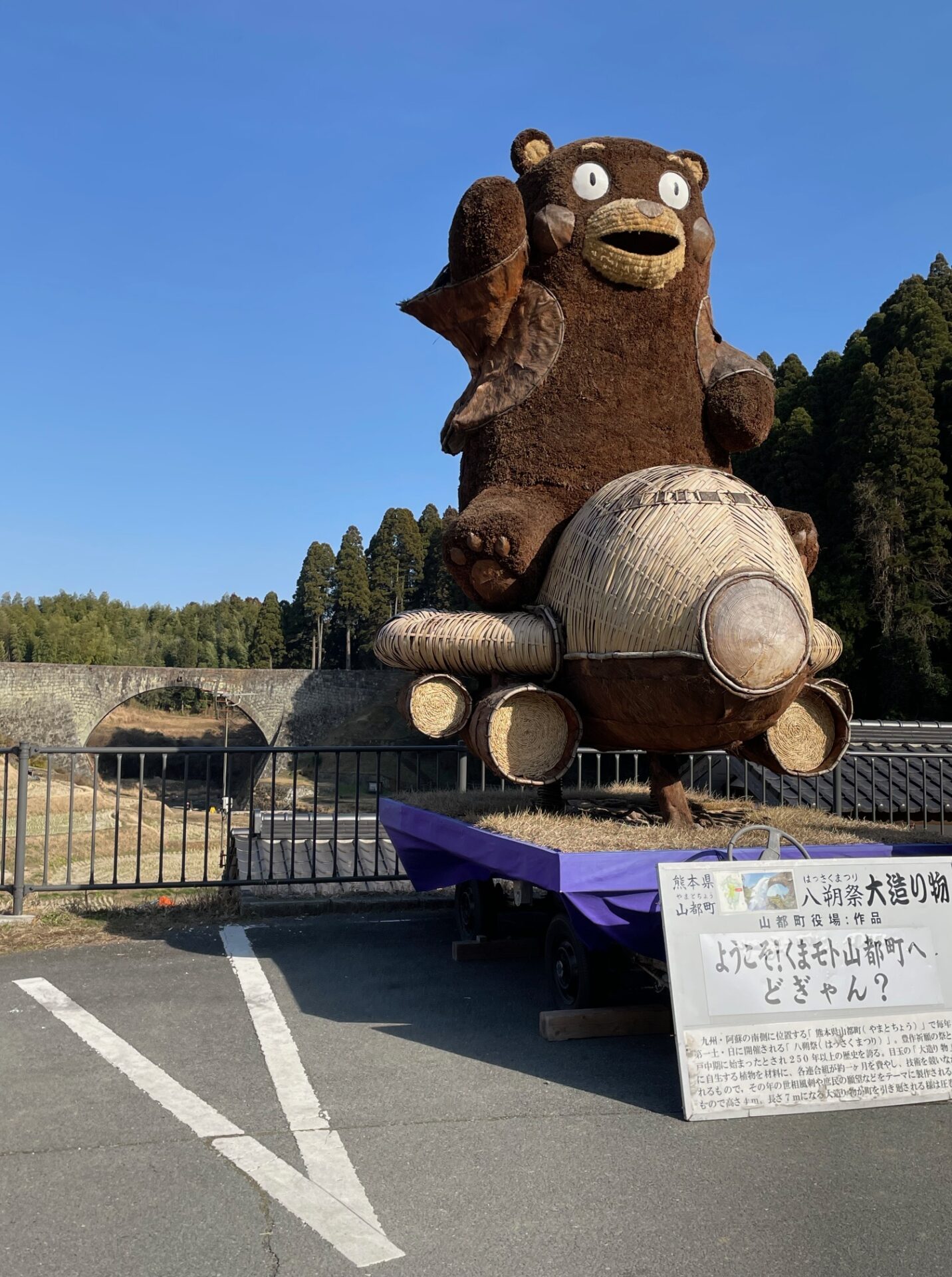
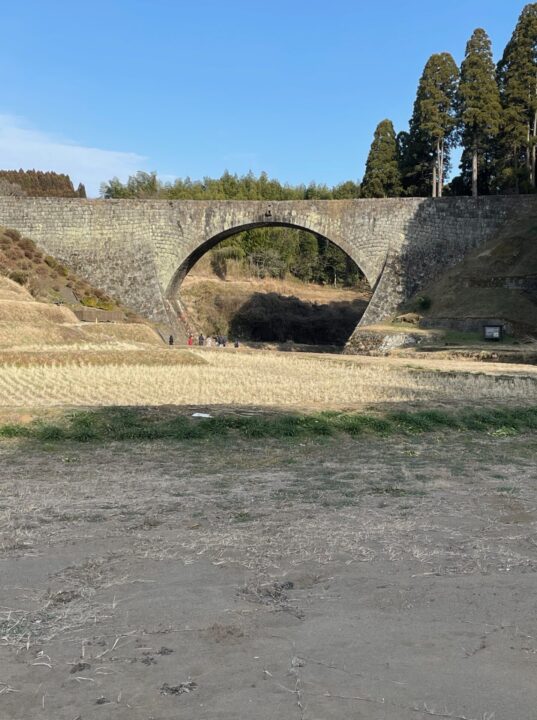
In the quiet mountain valley of Yamato Town in Kumamoto Prefecture, a massive stone arch suddenly appears before you. This is Tsūjun Bridge, built in 1854 as a bridge designed to carry water. Even today, it attracts many visitors as a symbol of Japan’s remarkable civil engineering heritage.
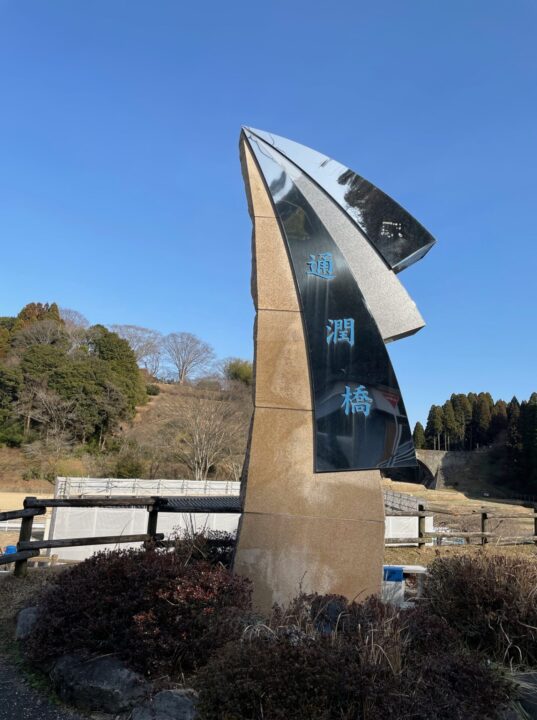
A bridge not for people, but for carrying water
When people think of Tsūjun Bridge, the first thing that comes to mind is its spectacular water discharge. From the center of the bridge, water shoots out with great force and plunges into the valley below—an impressive sight that you can find in many YouTube videos as well.
Originally, this discharge was a practical operation to flush out sediment that had accumulated in the aqueduct. Today, however, it is performed as a cultural and tourism event. The discharge dates are announced in advance, so be sure to check the schedule before you go. Since the number of discharge days is limited, witnessing it in person is considered very lucky.
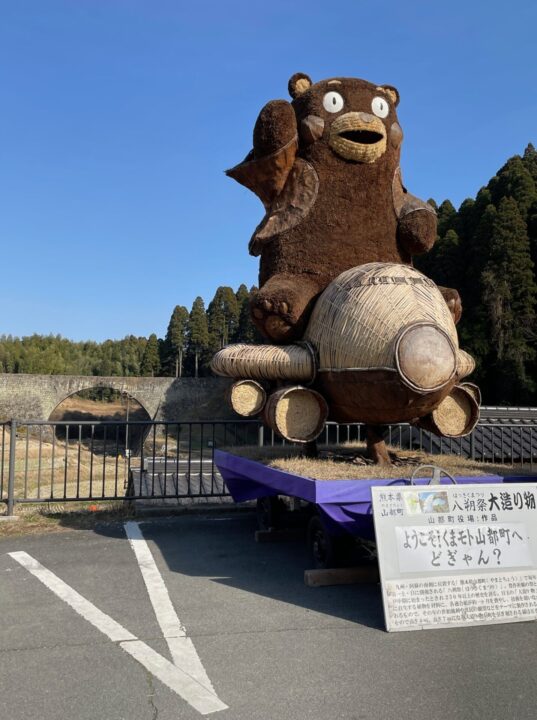
Arch Bridge
Because it sits quietly in the middle of a rural landscape, its true scale is hard to grasp at first glance. But Tsūjun Bridge is enormous—about 75 meters long, 20 meters high, and the stone arch spans roughly 28 meters across.
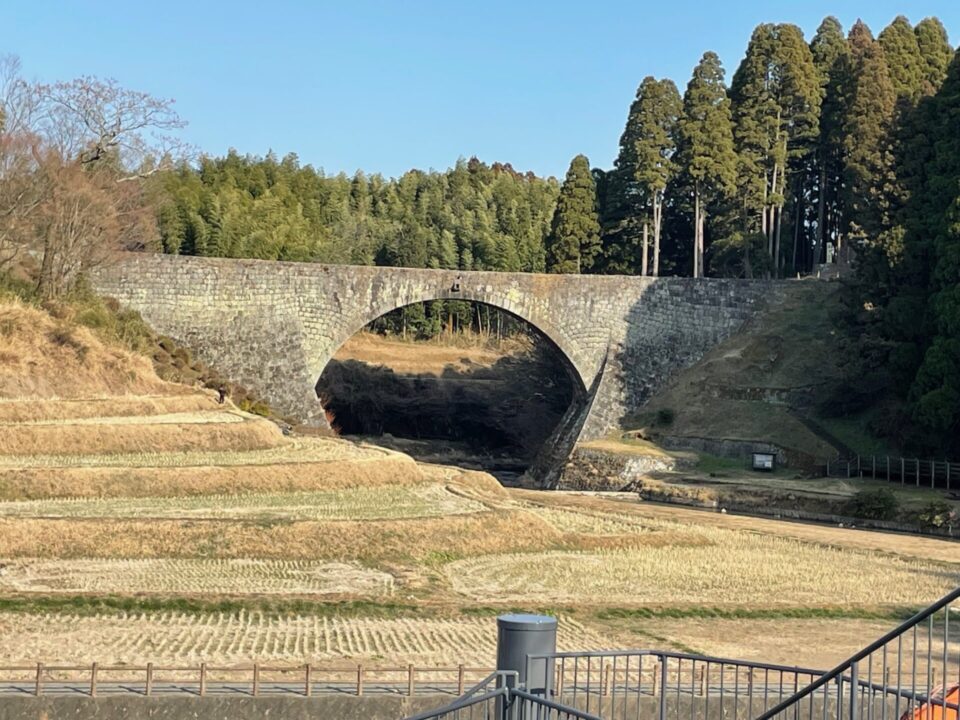
When you compare it with the people standing below, you can really appreciate just how massive it is.
It’s astonishing to think that such a large arch was built simply by stacking stones together.
A Dedicated and Visionary Leader
The Shiraito Plateau sits at a high elevation, and river water could not reach the fields. This meant that crops simply would not grow unless it rained—a harsh environment for the villagers.
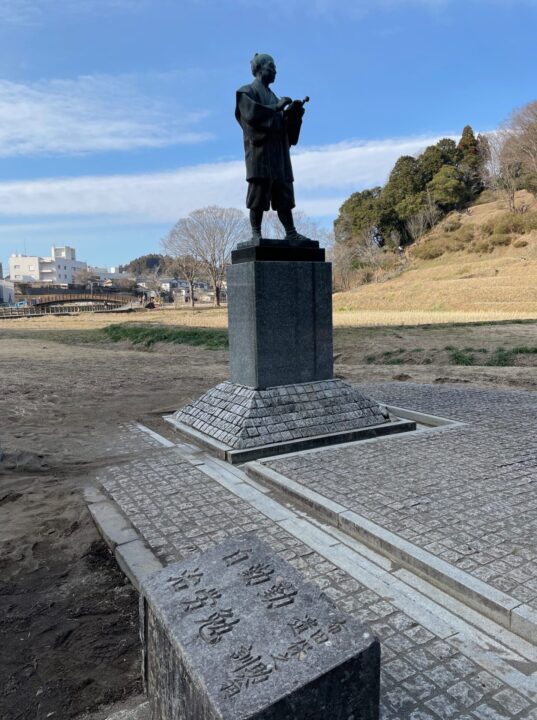
At that time, the village leader Yasunoshin Futa took action. Working together with the villagers, he set out to build a massive stone bridge that would carry water across the valley.
Instead of attempting a huge structure from the start, he first created small prototype arches, testing water pressure, stone placement, and even the angle of the aqueduct. Thanks to this careful preparation, water finally reached the fields, and agriculture in the region flourished. Remarkably, the bridge is still functioning today, continuing to deliver water just as it did in the 19th century.
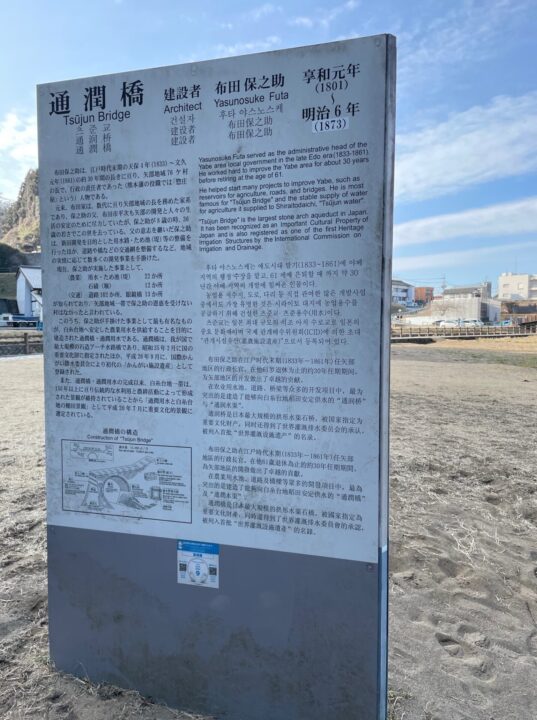
Tsūjun Bridge is said to have remained completely intact even during the powerful Kumamoto Earthquake—proof of its extraordinary strength. It’s astonishing to see such durability in a structure built with Edo‑period engineering techniques.
When I visited, construction was underway for new rest areas and visitor facilities. Once completed, this place will surely become an even more popular destination. I highly recommend you to visit this spot—you will be impressed by both the history and the engineering behind this national treasure.
Stay tuned for more updates of Japan. See you soon!
Click here for more.
〒861-3661 Nagahara, Yamato-cho, Mashiki-gun, Kumamoto Prefecture
コメント